
A bloodshot eye occurs when the small blood vessels on the surface of the eye become inflamed or dilated, making the white of the eye appear red or pink. It is most commonly caused by minor irritation, dryness, conjunctivitis, or lack of sleep, and usually resolves on its own. However, a bloodshot eye accompanied by pain, changes in vision, or discharge may require prompt medical attention.
A bloodshot eye is one of the most common reasons people seek advice from a pharmacy, and in the vast majority of cases it is nothing to worry about. The redness occurs when tiny blood vessels on the surface of the eye, known as the conjunctival vessels, become inflamed or engorged, giving the white of the eye a distinctly pink or red appearance. While the cause is often as simple as tiredness, screen time, or a mild allergic reaction, a bloodshot eye can occasionally be a sign of something that needs prompt clinical attention. At Luxtons Pharmacy in Exeter, our team is well placed to assess your symptoms, help identify the likely cause, and advise on the most appropriate treatment, whether that is an over-the-counter remedy or a referral for further care. In this guide, we walk through the most common causes of a bloodshot eye, the warning signs that should prompt you to seek urgent help, and the range of treatments available to get your eyes feeling comfortable again.
Book a consultation with our team in Exeter today for fast, expert advice on your bloodshot eye.
Key Takeaways
✔ A bloodshot eye is usually caused by minor irritation, dryness, allergies, or tiredness and often resolves without treatment.
✔ Conjunctivitis is one of the most common causes of a red, bloodshot eye and can be bacterial, viral, or allergic in origin.
✔ A bloodshot eye accompanied by pain, sensitivity to light, or changes in vision should always be assessed by a healthcare professional promptly.
✔ Our pharmacists at Luxtons Pharmacy in Exeter can assess your symptoms and recommend appropriate treatment or onward referral quickly and without a GP appointment.
✔ Many cases of bloodshot eye can be treated effectively with over-the-counter eye drops, antihistamines, or antibiotic eye drops where appropriate.
✔ Avoiding rubbing your eye, reducing screen time, and staying hydrated are simple self-care steps that can help relieve mild redness.
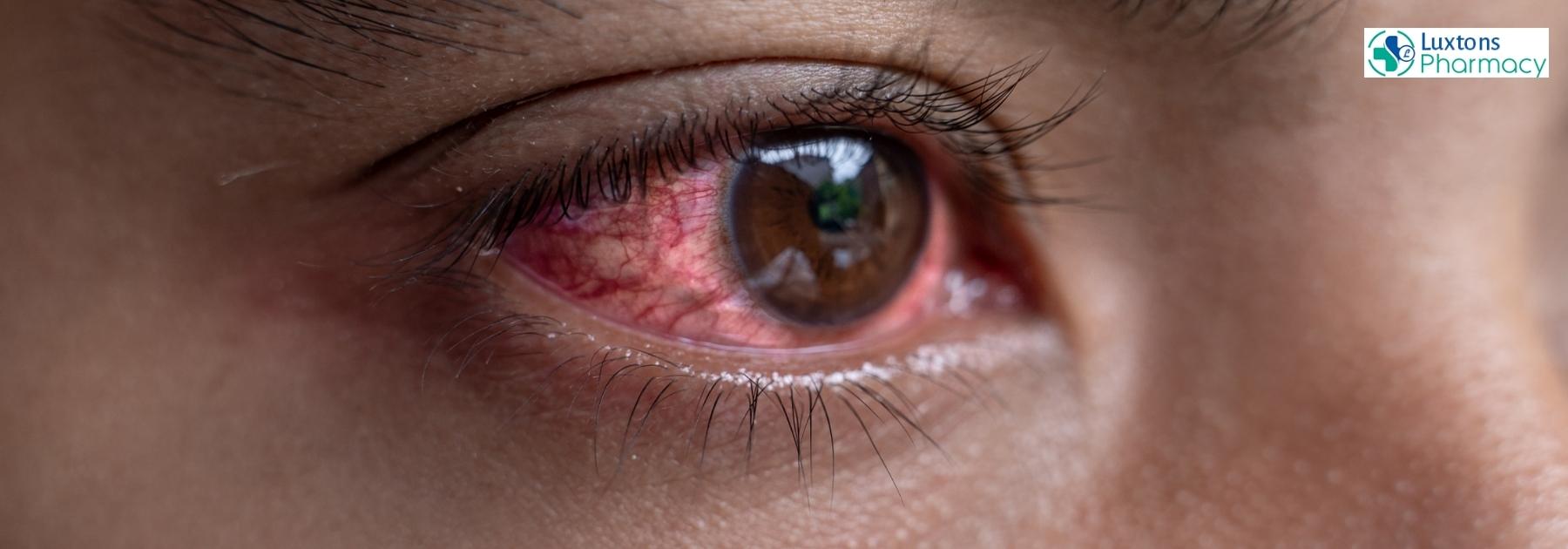
What Causes a Bloodshot Eye?
The causes of a bloodshot eye are wide-ranging, from the entirely benign to those requiring urgent assessment. Understanding what is most likely to be behind your red eye can help you decide whether self-care is appropriate or whether you should seek professional advice without delay. The most common causes fall into several broad categories, each with its own characteristic presentation and recommended management approach.
Environmental and lifestyle factors are responsible for the majority of cases seen in everyday practice. Prolonged screen use, insufficient sleep, exposure to smoke, dust, chlorine, or dry air, and wearing contact lenses for extended periods can all cause the blood vessels in the eye to dilate, producing a red appearance that typically resolves with rest and removal of the irritant. Alcohol consumption can also cause temporary redness due to its vasodilatory effects on the blood vessels throughout the body, including those in the eye.
Allergic reactions are another very frequent cause, particularly during the spring and summer months when pollen counts are high across the UK. Hay fever and other allergic conditions can cause significant redness, itching, watering, and swelling of the eyes, and these symptoms often affect both eyes simultaneously. Antihistamine eye drops or oral antihistamines can be very effective in managing allergic eye symptoms, and our team at Luxtons Pharmacy can help you identify the most suitable option for your needs.
Foreign bodies such as dust, a stray eyelash, or a particle of grit caught in the eye can also cause sudden redness and discomfort. In most cases, blinking or rinsing the eye with clean water or sterile saline will dislodge the foreign body and relieve the symptoms. If redness and irritation persist after attempting to remove a foreign body, or if you suspect something may be embedded in the surface of the eye, you should seek prompt professional assessment.
Conjunctivitis: The Most Common Infectious Cause
Conjunctivitis, sometimes referred to as pink eye, is an inflammation of the conjunctiva, the thin transparent membrane that lines the inner surface of the eyelid and covers the white of the eye. It is one of the most frequently encountered causes of a bloodshot eye and can be caused by a bacterial infection, a viral infection, or an allergic reaction, each of which presents slightly differently and requires a different approach to treatment.
Bacterial conjunctivitis typically causes a yellow or green sticky discharge, crusting of the eyelids particularly on waking, and redness in one or both eyes. It is contagious and can spread through direct contact or shared towels and pillowcases. While bacterial conjunctivitis is often self-limiting and may resolve within one to two weeks without treatment, antibiotic eye drops can help to shorten the duration of symptoms and are particularly recommended for those in close contact with vulnerable individuals. Our dedicated conjunctivitis treatment service at Luxtons Pharmacy offers fast access to assessment and treatment without the need for a GP appointment.
Viral conjunctivitis, which is often associated with a cold or upper respiratory tract infection, tends to produce a more watery discharge and is also highly contagious. It is caused by viruses such as adenovirus and does not respond to antibiotic treatment. Management is therefore supportive, focusing on hygiene measures to prevent spread and lubricating drops to relieve discomfort while the infection runs its course.
Allergic conjunctivitis, by contrast, is not contagious and is usually characterised by intense itching, redness, and watering in both eyes simultaneously, often accompanied by other hay fever symptoms such as sneezing and a runny nose. Antihistamine eye drops or oral antihistamines are the mainstay of treatment, and our pharmacists can help identify the most appropriate option for your specific situation. Our guide to conjunctivitis in babies provides further information for parents concerned about their child’s eye symptoms.
Other Medical Causes of a Bloodshot Eye
While the majority of bloodshot eyes have a benign cause, there are certain conditions that produce redness in the eye and require prompt medical attention. A subconjunctival haemorrhage occurs when a small blood vessel beneath the conjunctiva bursts, causing a bright red patch on the white of the eye. While this can look alarming, it is usually painless, does not affect vision, and resolves on its own within two to three weeks. It is often caused by straining, coughing, sneezing, or a minor knock to the eye, and while it rarely requires treatment, it should be reviewed by a pharmacist or optometrist if it occurs frequently or without obvious cause.
Dry eye syndrome is a chronic condition in which the eyes do not produce sufficient tears, or the tears evaporate too quickly, leading to persistent irritation, redness, and a gritty or burning sensation. It is particularly common in older adults, contact lens wearers, and those who spend long hours in front of screens, and it can significantly affect quality of life if left unmanaged. Lubricating eye drops, sometimes called artificial tears, are the cornerstone of dry eye management and are available without a prescription at Luxtons Pharmacy.
Conditions affecting the sinuses can also contribute to eye discomfort and redness, as the anatomical proximity of the sinuses to the eye socket means that inflammation in one area can produce symptoms in the other. Our guides to sinus infection and earache and sinus pain and earache explore this connection in more detail and may be useful if you are experiencing eye symptoms alongside facial pressure or nasal congestion.
More serious causes of a bloodshot eye include uveitis, an inflammation of the middle layer of the eye that can cause redness, pain, and sensitivity to light and requires prompt treatment to prevent vision loss. Scleritis, an inflammation of the sclera (the white of the eye), can also present with significant redness and deep eye pain. Acute angle-closure glaucoma is the most urgent of all, presenting with sudden severe eye pain, pronounced redness, nausea, and blurred vision, and constitutes a medical emergency requiring immediate treatment to prevent permanent vision loss.
| Cause | Key Symptoms | Action Required |
|---|---|---|
| Tiredness or screen overuse | Redness, dryness, mild irritation | Rest, lubricating eye drops |
| Allergic conjunctivitis | Itching, watering, both eyes affected | Antihistamine drops or tablets |
| Bacterial conjunctivitis | Yellow or green discharge, crusting | Often self-limiting. Antibiotic eye drops may shorten duration. See pharmacist. |
| Viral conjunctivitis | Watery discharge, often follows a cold | Self-limiting, supportive care and hygiene measures |
| Subconjunctival haemorrhage | Bright red patch, no pain or discharge | Usually resolves in two to three weeks |
| Dry eye syndrome | Persistent gritty, burning, red eyes | Lubricating eye drops, lifestyle adjustments |
| Ear or sinus-related | Eye discomfort alongside ear or facial pain | See our ear infection treatment guide |
| Acute angle-closure glaucoma | Severe pain, nausea, blurred vision | Medical emergency. Seek urgent care immediately. |
Treating a Bloodshot Eye at Home
For mild, non-urgent cases of a bloodshot eye, there are several self-care measures that can help relieve redness and discomfort while your eye recovers. Lubricating eye drops, sometimes called artificial tears, can provide significant relief for dryness-related redness and are available over the counter at Luxtons Pharmacy without a prescription. These drops come in a variety of formulations, including preservative-free options for those who need to use them frequently or who have sensitive eyes, and our pharmacists can help you choose the most appropriate product for your needs.
Applying a clean, cool compress to the closed eye can also help to soothe inflammation and reduce swelling, particularly in the case of allergic reactions or after a long day in front of a screen. For warm compress application, which can be beneficial for certain conditions such as blepharitis or meibomian gland dysfunction, our team can provide specific guidance on technique and duration.
Avoiding rubbing your eye is important, as this can worsen inflammation and, in the case of an infectious conjunctivitis, spread the infection to the other eye or to other people. If you wear contact lenses, remove them until your eye has fully recovered and consult your pharmacist or optometrist before resuming use. Staying well hydrated, reducing screen time, and taking regular breaks from close work using the 20-20-20 rule (every 20 minutes, look at something 20 feet away for 20 seconds) can all support recovery from minor eye redness and help to prevent recurrence.

When to Seek Professional Help for a Bloodshot Eye
Most cases of a bloodshot eye will resolve within a few days with self-care or over-the-counter treatment. However, there are certain warning signs that should prompt you to seek professional advice without delay. You should contact a pharmacist, GP, or optometrist promptly if your bloodshot eye is accompanied by significant pain or pressure in the eye, sudden changes or deterioration in your vision, sensitivity to light, a dense or coloured discharge that is worsening rather than improving, or if the redness does not improve after a week of appropriate self-care.
Contact lens wearers who develop a red or painful eye should remove their lenses immediately and seek professional advice before reinserting them, as contact lens-related eye infections can deteriorate rapidly and may cause serious complications if not treated promptly.
If you experience sudden severe eye pain alongside redness, nausea, and blurred vision, you should treat this as a potential medical emergency and dial 999 or attend your nearest accident and emergency department immediately, as these symptoms may indicate acute angle-closure glaucoma which requires urgent intervention to preserve vision.
Frequently Asked Questions
Here are some of the questions our team at Luxtons Pharmacy in Exeter is most commonly asked about bloodshot eyes and associated eye conditions.
Can a bloodshot eye be a sign of something serious?
In most cases, a bloodshot eye has a minor and easily treatable cause. However, redness accompanied by pain, vision changes, or sensitivity to light can occasionally indicate a more serious condition such as uveitis or acute glaucoma, and should always be assessed by a healthcare professional promptly rather than left to resolve on its own.
Is bacterial conjunctivitis contagious?
Yes, bacterial and viral conjunctivitis are both highly contagious and can spread through direct contact, sharing towels or pillowcases, or touching the eye and then touching surfaces. Good hand hygiene, avoiding touching the affected eye, washing bedding and towels regularly during an episode of conjunctivitis, and not sharing personal items are all important steps to prevent the spread of infection to others in your household.
Can I wear contact lenses if I have a bloodshot eye?
It is generally advisable to avoid wearing contact lenses until your bloodshot eye has fully resolved, as lenses can exacerbate irritation and, in the case of an infection, may harbour bacteria and prolong the episode. Always speak to your pharmacist or optometrist before resuming contact lens use after an episode of conjunctivitis or significant eye redness to ensure it is safe to do so.
Will antibiotic eye drops help my bloodshot eye?
Antibiotic eye drops are only effective if the cause of your bloodshot eye is bacterial. They will not help with viral conjunctivitis, allergic reactions, dry eye, or other non-bacterial causes of redness. Our pharmacists can help assess whether antibiotic drops are appropriate for your specific situation and recommend the most suitable product if they are.
How long does a bloodshot eye usually last?
This depends on the underlying cause. Minor redness from tiredness or screen overuse usually resolves within 24 to 48 hours with rest and lubricating drops. Bacterial conjunctivitis may resolve within one to two weeks without treatment, or more quickly with antibiotic drops. Viral conjunctivitis may take one to two weeks to fully resolve. A subconjunctival haemorrhage may take up to two to three weeks to clear completely.
Fast, Expert Advice for Bloodshot Eyes at Luxtons Pharmacy, Exeter
At Luxtons Pharmacy in Exeter, we know that eye symptoms can be uncomfortable and worrying, and that getting clear, trustworthy advice quickly makes all the difference. Whether your bloodshot eye is the result of a long day at a screen, a bout of seasonal allergies, an episode of conjunctivitis, or something you would like a professional to take a closer look at, our experienced pharmacists are here to help. We provide fast, friendly, and clinically informed advice without the need for a GP appointment, serving patients across Exeter and the wider local community every day of the week. Do not put up with uncomfortable, red eyes when expert help is just around the corner. Book now or pop in to speak to our team and get the answers and treatment you need today.
